
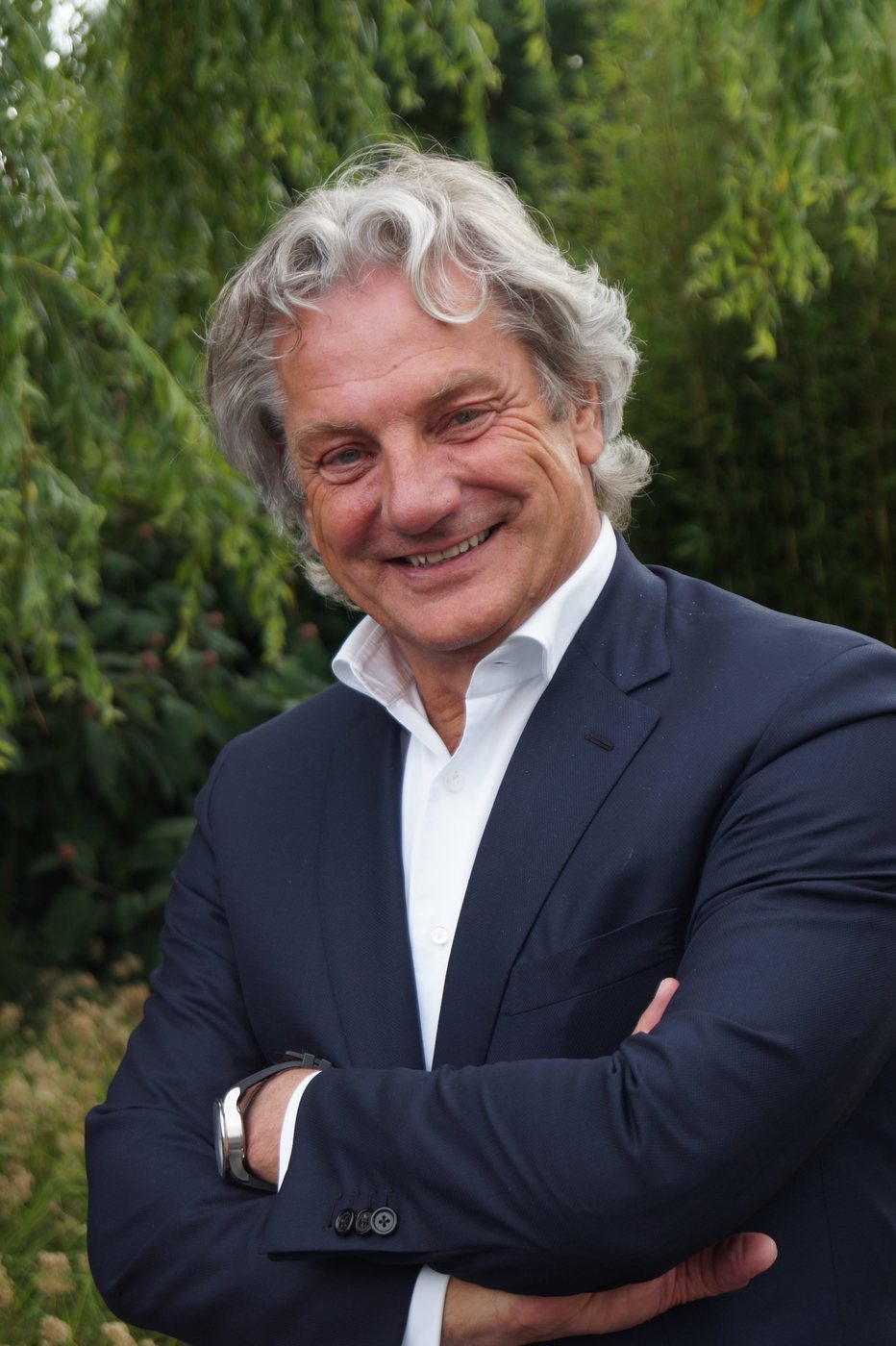
Peter K.D. de Vries
Good governance calls for craftsmanship and moral leadership
Experience. Vision. Trust. More than forty years of experience in entrepreneurship, logistics, manufacturing, governance and corporate restructuring.
Throughout my career I have learned that difficult decisions are rarely purely financial. Behind every company are entrepreneurs, employees and families. It is precisely in times of crisis that leadership becomes visible. Not by shouting louder, but by bringing calm, maintaining trust and making choices that remain defensible in the long run.
Calm, overview and decisiveness
Organisations call on me when experience, independent thinking and boardroom calm are needed. Throughout my career I have helped companies grow, make difficult choices and create new perspectives. Today I bring that experience to the table as a supervisory board member, director, turnaround specialist and strategic advisor.
As an entrepreneur I built SNEL Shared Logistics into a leading logistics service provider. After its sale to Vos Logistics I have remained active as a director, advisor and supervisory board member. Today I put my experience to work for companies, family businesses and community organisations in need of strategic insight, independent oversight and decisive leadership.
Where I make the difference
Turnaround
- Restructuring
- Calm in complex situations
- From strategy to execution
- Continuity
- Leadership
Governance
- Supervisory Boards
- Advisory Boards
- Family businesses
- Good governance
Logistics
- Retail
- Supply Chain
- Warehousing
- Sustainability
- Shared Logistics
Strategic advice
- Strategy and direction
- Financing questions
- Succession
Good governance calls not only for craftsmanship, but also for moral leadership.
Throughout my career I have learned that companies are not saved by spreadsheets, but by people. Behind every organisation are entrepreneurs, employees, customers and families. That is why I believe leadership requires vision, calm and trust.
From entrepreneur to supervisory board member
-
1980Start of my career
The discovery of leadership
During my studies I also took plenty of time for other things in life. I certainly did not belong to the students who completed their degree in record time. During my technical studies in precision engineering I also came to an important insight: I would not become the technical specialist my father had originally envisaged.
After technical college I studied business administration for another year. It was during my internships in particular that I discovered where my real interest lay: not so much in technology itself, but in organisations, people and above all in leadership.
During my internship I ended up at Disselhoff Consultancy, a small management consulting firm in Hilversum. From day one I joined Disselhoff on visits to clients. As a young intern I suddenly found myself in the boardrooms of companies, where firm discussions took place and harsh words were sometimes spoken. It was there that I learned a saying that has stayed with me throughout my career:
“The trouble sits at the top.”
A simple sentence, but with an important message: when things are not going well in a company, you should not only look at the work floor. Problems often originate at the top, in leadership, decision-making and the way an organisation is managed.
It became a wonderful and instructive period. I was keen to continue that experience and managed to arrange my second internship at Disselhoff as well. It was precisely the enormous variety of companies that made the work fascinating to me. I visited machine factories, shipyards, electrical engineering companies, port businesses and hospitals. Every company was different, but everywhere it ultimately came down to the same questions: how do you organise a company well, how do you take decisions and how do you bring people along?
After my studies I knew for certain: this was where my future lay. My first job application was accordingly ambitious, at McKinsey & Company, then (and still) located on the Amstel in Amsterdam. After a full day of assessments, the interview followed at the end of the day. It did not result in a job, but it did produce a piece of advice that would prove decisive for the rest of my career. My ambition to lead was clear, but for consultancy I still lacked the necessary practical experience. The advice was simple: first go and gain broad experience in business.
And that is exactly where my career began.
-
Zonnatura / Pharmafood
Growing, innovating and seizing opportunities
By then I was living in Harderwijk and I applied for a management position as assistant plant manager at Smits’ Reform in Putten. The company was best known for the Zonnatura brand and had a very extensive range of health food and natural food products.
In my role I was jointly responsible for production, warehousing and distribution. It soon became clear that on a number of points I had different views on how the business should be run than the plant manager at the time. After six months I was given the opportunity to become plant manager myself.
That moment more or less coincided with an important development: Zonnatura made the move from the traditional health food shops to the supermarkets. This produced spectacular growth figures and, at the same time, major challenges in production and logistics. We were literally outgrowing our premises. The various locations on and around the industrial estate in Putten became less and less practical, and eventually we were able to move to a completely new company site.
A remarkable development in that period was the rise of large rice crackers on the international market. In Putten we developed these further into what later became the well-known rice cakes. Demand grew so fast that production could barely keep up, even running 24 hours a day, seven days a week. The production process was complex and we developed many of the required machines and technical solutions ourselves.
Sometimes new opportunities arise unexpectedly. A member of our technical department left for a pharmaceutical manufacturer and called me not long afterwards to say that producing tablets and capsules could be an interesting new market for us as well. That idea became one of the foundations for establishing Pharmafood, specialised in nutritional supplements. An attractive new activity, not only because of the growth potential, but also because margins were considerably higher than in the health food market, where competition had increased sharply.
In short, it was a wonderful and highly instructive period. I experienced at close quarters what rapid growth does to a company: constantly creating capacity, adapting processes, bringing people along and at the same time recognising new opportunities. An experience I would benefit from many times in the rest of my career.
-
Siber Hegner / DKSH, Switzerland
International leadership and change management
At some point I was approached by a headhunter from Egon Zehnder for an executive position at Siber Hegner in Switzerland. In this role I was given responsibility for a series of production and logistics companies in Western Europe.
Siber Hegner was at the time the largest family business in Switzerland, with a history of more than 150 years. The company operated as an international trading house between Asia, Switzerland and the rest of Europe. From Europe it exported technical products, machinery, pharmaceutical products and consumer goods to Asia, where Siber Hegner also acted as representative. In the opposite direction the flow included raw materials for human and animal consumption, silk and foodstuffs. These raw materials were processed and distributed in a range of different factories across Europe.
In several European countries Siber Hegner had production companies and distribution centres. The group strategy called for further consolidation of these activities. An important part of my responsibility therefore consisted of reorganising, merging and sometimes closing companies and locations. Not because these businesses were performing badly, on the contrary, almost all of them were highly profitable, but because further consolidation was meant to lead to an even stronger and more efficient organisation. In 2012 Siber Hegner merged with Diethelm Keller into DKSH, with revenues of almost 12 billion euros, a net result of 220 million and more than 26,000 employees.
This period taught me a great deal about reorganising and change. Above all about how to take far-reaching decisions without losing sight of the human side. Closing a company or a location may be a business decision on paper, but for the employees involved and their families it means much more. That awareness has stayed with me throughout my career.
From Switzerland one message was constantly drummed into us: “No business as usual.” Do not automatically accept that something has to stay the way it has always been, but keep looking for improvement and innovation. In my Krauthammer training courses I was also taught: “Change is a must. Because if you change nothing, you cannot improve anything.” That attitude strongly stimulated my capacity for innovation and became an important part of my leadership style.
After a number of intensive years, however, the extensive international travel increasingly began to wear on me.
-
Kees Becker Logistics
From heavy weather to growth
This next step also came my way through a headhunter, this time for an executive position much closer to home, at Kees Becker Logistiek, a family business specialised in the storage and distribution of food products to the retail sector.
At that moment the company was going through heavy weather. Its largest client was CSM, with well-known brands such as Red Band, Venco, De Ruijter and HAK. During the annual rate negotiations CSM had applied firm pressure. Instead of the necessary cost-covering indexation, Kees Becker Logistiek had to accept a substantial rate reduction. As a result, a company that had been profitable for years suddenly became heavily loss-making.
Together with one of the owner’s sons I set to work to professionalise the company and make it profitable again. Almost immediately after taking office as managing director and co-owner, I entered an English-language tender for the warehousing and transport of Wasa, which we successfully won. Other well-known brands in the food industry followed and the company began to grow strongly.
At the same time we saw margins in food distribution to the large retailers coming under increasing pressure, partly as a result of the supermarket price war at the time. Simply transporting more volume was therefore not the answer. We decided to shift our strategy.
We focused more strongly on confectionery and above all on the out-of-home channel: smaller and regional wholesalers where consolidation genuinely added value. By combining products from different brands in one truck, and sometimes even on one pallet, we could distribute more efficiently while offering our clients an attractive logistics concept.
The strategy caught on. New clients joined and the company grew rapidly. We built, expanded and then built again to accommodate the growth. At a certain point, however, the family reached the stage where they wanted calm and no further growth.
For me, that came precisely at a moment when I still saw plenty of opportunities. After all, further growth no longer had to come exclusively from additional square metres of warehousing. With cross-docking, smaller shipments from new clients could be added to existing distribution flows. In my view there was still considerable growth potential.
But the family’s ambitions and mine began to diverge. At fifty I was not yet ready to simply mind the shop. I wanted to keep building, changing and growing. I therefore decided to sell my share in the company back to the family and look for a new challenge. Kees Becker Logistiek later joined forces with Bakker Logistiek, which eventually became part of the French logistics group STEF.
This period once again confirmed an important lesson for me: growth does not come only from doing more of the same, but above all from recognising in good time where your company can genuinely add value.
-
Entrepreneurship / Management Partners
Taking the helm myself
Suddenly being in between jobs at fifty is not necessarily the easiest phase of a career. At the same time, fate had it that my mother was seriously ill during that period and would pass away. When my father died, some ten years earlier, I felt I had made too little time available. I wanted to do that differently this time. I therefore deliberately decided to step back from work for several weeks and make time for my mother and family.
That period also gave me the opportunity to think about my own future. For once no full diary, no company demanding attention every day, but time to order my thoughts and decide how I wanted to move forward.
One thing became very clear to me: from now on I wanted to be fully at the helm myself. I no longer wanted to just lead companies, I wanted to be a true entrepreneur.
In fact, the name had been ready for a long time. From the age of eighteen I had carried the name Management Partners with me, intended for the company I one day wanted to start in the field of management and organisation. Perhaps I was somewhat inspired by my sister, who had started her own company, Promotion Partners, at a young age.
At first sight, entrepreneurship did not obviously run in our family. My father flew as a flight engineer for KLM and my grandfather, Koene Dirk Parmentier, was one of the pioneers of Dutch aviation and played an important role in the early years of KLM. Yet the entrepreneurial spirit was certainly there. My father returned from almost every flight to America or Japan with ideas and products about which he thought: we should do something with this. He never took that step himself, but some of the friends with whom he shared his ideas built successful businesses on them.
Perhaps entrepreneurship was in the blood more than I had long thought. At fifty I felt the moment had come to finally act on it. Management Partners could come out of the drawer and the company was quickly incorporated.
-
Turnarounds and working with banks
Stepping in when it matters
The bank of Kees Becker Logistiek, ING, soon contacted me for a meeting. The question was whether I would be willing to temporarily take over the management of transport companies that fell under the bank’s intensive care department. The message was actually very simple: “What you did in Zeewolde, you could do for other ING client relationships as well.”
Family businesses, in which a large part of the family’s wealth is often tied up, can end up in severe financial difficulty for a variety of reasons. When the bank still has confidence in the company and sees prospects for recovery, a restructuring phase usually follows under the supervision of the bank’s recovery department. The bank makes an initial assessment of both the company and the family and shareholders behind it. It then usually proposes a number of experienced turnaround managers, from whom the shareholders themselves can choose.
When I arrive at such a loss-making company, the first gain is often simply that calm returns to the relationship with stakeholders. Someone comes in from outside who can look at the situation with some distance and take decisions. My position is always clear: I am not there for the bank, but first and foremost for the company, and then for the family and other stakeholders.
A reorganisation within a family business can be highly emotional. The first generation has sometimes spent a lifetime building a company, but that is no guarantee that the next generations possess the same entrepreneurial DNA. Moreover, a growing company requires different leadership in every phase of its life. What works excellently in a company with fifty employees may no longer be the right approach with five hundred. At the same time, markets, regulation, technology and competition are becoming ever more complex.
Companies can run into trouble for many reasons. External factors are usually mentioned first: the economy, competition, rising costs or changing market conditions. But weak or insufficient leadership is a cause of all times, during economic crises as well as in periods of prosperity.
My first attention therefore almost always goes to leadership and to the quality of financial and operational reporting. What is really happening in the company? Where is money being made and where is it being lost? Which activities are the bleeders? And above all: which decisions have been postponed for too long?
Strikingly, many of the answers are already present within the company. People on the work floor often know very well where processes get stuck, where money is being wasted and what could be improved. The problem is usually not a lack of knowledge, but a lack of decision-making and decisiveness. That is where I see an important task for the turnaround manager: listen, analyse, make choices and then genuinely act.
From the age of fifty I have temporarily managed well over forty companies in this way. None of these companies went bankrupt during my involvement and in the end almost all of them continued successfully, some even very successfully.
My approach is emphatically not to make myself indispensable for long. In the first few weeks I am usually present two or three days a week. As soon as calm has returned, the key decisions have been taken and the organisation is back in control of the business, I quickly reduce my presence to one day or sometimes even half a day a week. That keeps costs manageable and, more importantly, forces the organisation to move forward on its own strength again.
In this period I was able to apply virtually everything I had learned in the years before. Many assignments were in transport and logistics, but I also worked for companies in machine building, metal construction, shipbuilding and other manufacturing industries. Every sector requires a different approach. A production company with machinery, inventories and work in progress has a very different dynamic from a service company. In addition to ING, I was later also engaged by ABN AMRO, Rabobank and various investors and private equity funds.
I am still in regular contact with many of these companies and entrepreneurs. At several of them I later joined the Advisory Board or Supervisory Board. I may well regard that as the finest proof that a turnaround is not just about financial figures and reorganising, but above all about trust, people and creating a company that can stand on its own feet again.
-
SNEL Shared Logistics
From turnaround to entrepreneurship
This time the company did not come my way through my banking network. Through my own network I was made aware of the poor situation at the international transport company G. Snel in Woerden. I knew the company in passing and became interested. Just finding out who the owners were proved quite a challenge.
Via a Luxembourg holding company I eventually ended up at a UBS investment fund in Zurich. From the available documents I managed to identify a few members of the Supervisory Board, who turned out to live in London. The chairman had a rather complicated name, and after dozens of phone calls I finally got a young man on the line who told me I was probably looking for his father. That same evening I spoke to him by phone. Three days later I was sitting at his table in London, and a week after that with the managing director of G. Snel in Woerden.
It soon became clear that the situation was considerably more serious than people in London thought. Within a few days I also came to the conclusion that I could not move forward with the then managing director and a number of people around him. From London I was given carte blanche to intervene. The top of the organisation was reorganised and I deliberately opted for a much flatter structure.
What struck me once again was how much expertise, commitment and energy was present below the management layer. People knew very well what was going wrong and also had ideas about how to do better. Above all, they needed room and trust to actually put that knowledge to use.
One of the first major problems was the warehouse. Almost 40,000 square metres of halls stood largely empty and formed an enormous financial drain. Nearby, Nutricia in Zoetermeer was facing a major recall at that very moment. Even before they had a complete picture of the logistical consequences, I made contact and offered our available capacity. A large part of the recalled shop inventory subsequently came to Woerden. In one stroke, about a third of our warehouse capacity was filled.
Shortly afterwards we managed to bring in other clients as well. Within about nine months the halls were largely full and the loss-making warehouse problem had been solved.
Strategically, the course in transport had to change as well. Large players were active in international transport and foreign competition was fierce. G. Snel lacked sufficient distinctiveness there. I saw far more future in fine-mesh Benelux distribution.
In Woerden, however, we had one important disadvantage: there were hardly any large shippers in the direct vicinity that could provide enough volume to serve as the basis for such a distribution network. So we had to organise the volume in a different way.
My earlier experience with consolidation in food gave me the idea of applying the same concept in non-food. Intratuin became one of the first major examples. Individual stores sometimes received as many as twenty different trucks a day, some delivering just one pallet. Logistically, that could be done much smarter.
Within six months we developed a concept in which we collected goods from around 170 suppliers, sometimes daily. Those goods were consolidated in Woerden and then delivered to the stores in full trucks. Instead of dozens of separate deliveries, one efficient, bundled flow of goods emerged.
The concept caught on, and after other garden centre retailers joined, the DIY stores followed. Later we added urban distribution. SNEL eventually developed into one of the larger carriers in urban areas and shopping streets.
Within a year G. Snel was profitable again and the owners wanted to sell the company. But by then the financial crisis had broken out. Large transport companies that would normally have been potential buyers dropped out or held back their investments.
After about nine months UBS began to press for a sale, partly because investment funds were being wound down. Via ING I was eventually put on the track of a possibility I had not foreseen at all: why not buy the company myself?
My daily presence had by then been reduced to about one day a week. The company was running independently again and I saw ownership as an interesting combination with my other work as a turnaround manager. And so, from temporary director, I eventually became entrepreneur and owner of the company I had originally only come to rescue.
I felt the name G. Snel referred too much to the family business the company had once been. I therefore changed the name to SNEL Shared Logistics. That name expressed exactly the vision I had in mind: we share our warehouses, our distribution network and our logistics expertise with our clients.
The remarkable thing was that in the years that followed, SNEL hardly needed any traditional acquisition. Our consolidation model meant that we were already collecting goods daily or weekly from many shippers on behalf of one or more retailers. As a result, they got to know our service and performance automatically. When their existing carrier could not deliver enough capacity or quality during busy periods, the step to SNEL was relatively easy. All EDI connections and contacts were already in place.
The crossdock grew explosively and for years revenue increased by around 20% or more annually. At a certain point, however, the physical limits of our location in Woerden came into view. Growth could no longer come solely from more square metres and more goods through the crossdock. Even with the adjacent Bijenkorf distribution centre, there was not enough space.
We therefore added a new growth strategy: taking over shippers’ own transport operations. That meant taking over not only transport activities, but often employees and equipment as well. For employees such a transition is far-reaching, but for a shipper saying goodbye to its own drivers and transport organisation it is often an emotional step too. It requires trust and above all care in the way you deal with people.
That is precisely where we built up a great deal of experience at SNEL. Over the years we successfully carried out several such takeovers. SNEL Shared Logistics eventually grew into a company with around 370 tractor units and almost 500 employees.
What began as the turnaround of a company in serious financial trouble developed into a fast-growing logistics business with its own distinctive concept. For me personally it was also the step from turnaround manager to entrepreneur alongside that work: not just restoring a company, but then taking the risk myself and building for the future.
-
Vos Logistics
From partnership to handover
Through my network I had once been introduced to Vos Logistics as a potentially interesting party to sell SNEL Shared Logistics to in due course. At the time I was not thinking about that at all. The company was growing strongly, I greatly enjoyed it and a sale was certainly not on my agenda. So I let the contact take its course.
Yet our paths crossed again. A warehouse client of Vos Logistics issued a tender for its distribution, which at that time was carried out by a competitor of SNEL Shared Logistics. We quickly saw that we complemented each other very well and decided to bid for the tender jointly. For Vos Logistics the larger shipments to distribution centres were particularly interesting, while from Woerden we were strong precisely in the smaller, fine-mesh shipments. We could neatly consolidate those with our existing flows of goods.
We won the tender, and with that the basis for further cooperation emerged almost naturally.
What mattered to me were the signals from our own organisation. Whenever I asked in Woerden how the cooperation with Vos Logistics was going, I heard almost without exception that contact with both the operation and the people was pleasant, practical and smooth. That often says more than what is discussed at a boardroom table.
Operationally, too, we grew ever closer. SNEL Shared Logistics was growing enormously in those years, and on peak days we were sometimes twenty to thirty trucks short at the start of the day. At such moments we could call on Vos Logistics. Trust grew on both sides and the two organisations got to know each other better and better.
That enormous growth also had a downside. The company demanded more and more of my time and drew me to Woerden more often than I liked. To me, entrepreneurship means freedom, but without noticing I was once again in danger of being ruled by daily operations.
With retirement age slowly coming into view, a moment of reflection naturally arrived as well. Did I want to keep up this pace for years to come? And perhaps more importantly: what would ultimately be best for the continuity and further development of SNEL Shared Logistics and the people who worked there?
Contact with Vos Logistics was picked up again. By then we knew each other well, the companies complemented each other and mutual trust had developed. As a result, the sale ultimately did not feel like a sudden decision, but like a natural transition to a next phase.
After the sale I remained intensively involved for another two years to guide the transition. After that I could in principle have said goodbye. Things turned out differently. To this day I am active within Vos Logistics, with specific responsibilities and increasingly in an advisory and strategic role.
So the sale of SNEL Shared Logistics did not mean the end of an entrepreneurial period for me. Above all, it was the beginning of a new phase in which I could continue to put my experience to use in a different way.
-
TodayAdvisory Boards and Supervisory Boards
Passing on experience and continuing to learn
For many years I have been involved as a member of several Advisory Boards at various transport companies, and recently also at a manufacturing company again. In addition, I am a mentor at NLgroeit, where I coach entrepreneurs and growing companies and can share my experience with them.
It is precisely this sharing of knowledge and experience that appeals to me. Not only because I can pass on something from my own career, but at least as importantly because I also learn constantly from entrepreneurs, directors and people from other organisations. Everyone brings their own experiences, ideas and view of business. I find that interaction inspiring, and it keeps me sharp, active and young.
The energy I have had throughout my working life to get in the car at six in the morning and put in long days is still there. I simply use that energy differently now. Less from within daily operations and more by thinking along, asking questions, connecting people and making my experience available where it can be of value.
To me, this may well be one of the finest phases of my career: no longer having to do everything myself, but helping others move forward.
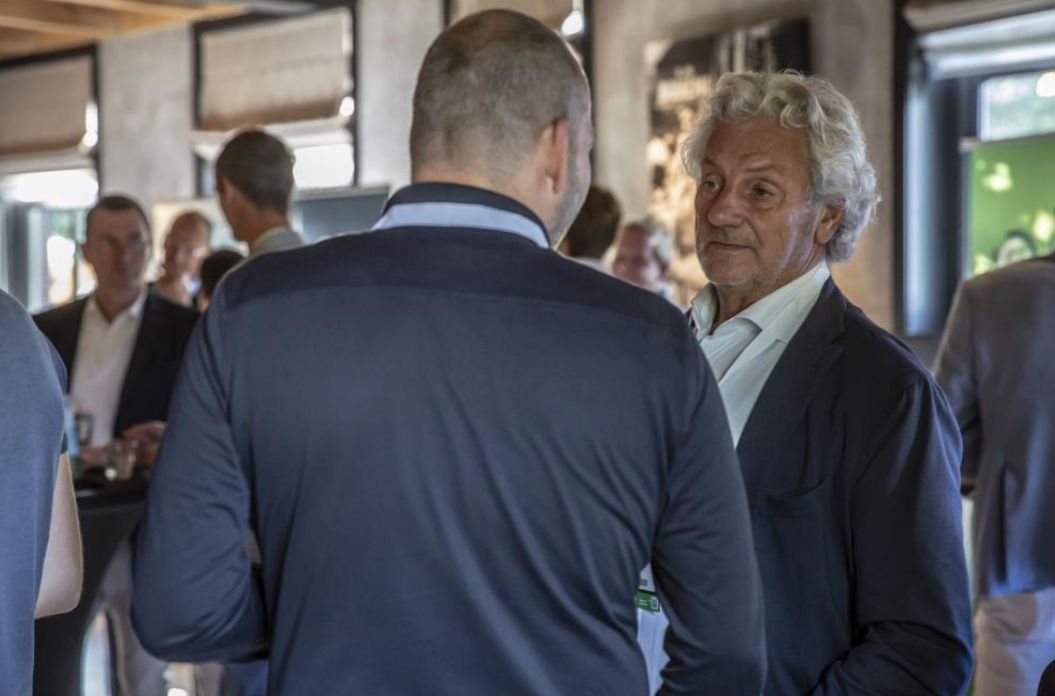
Governance
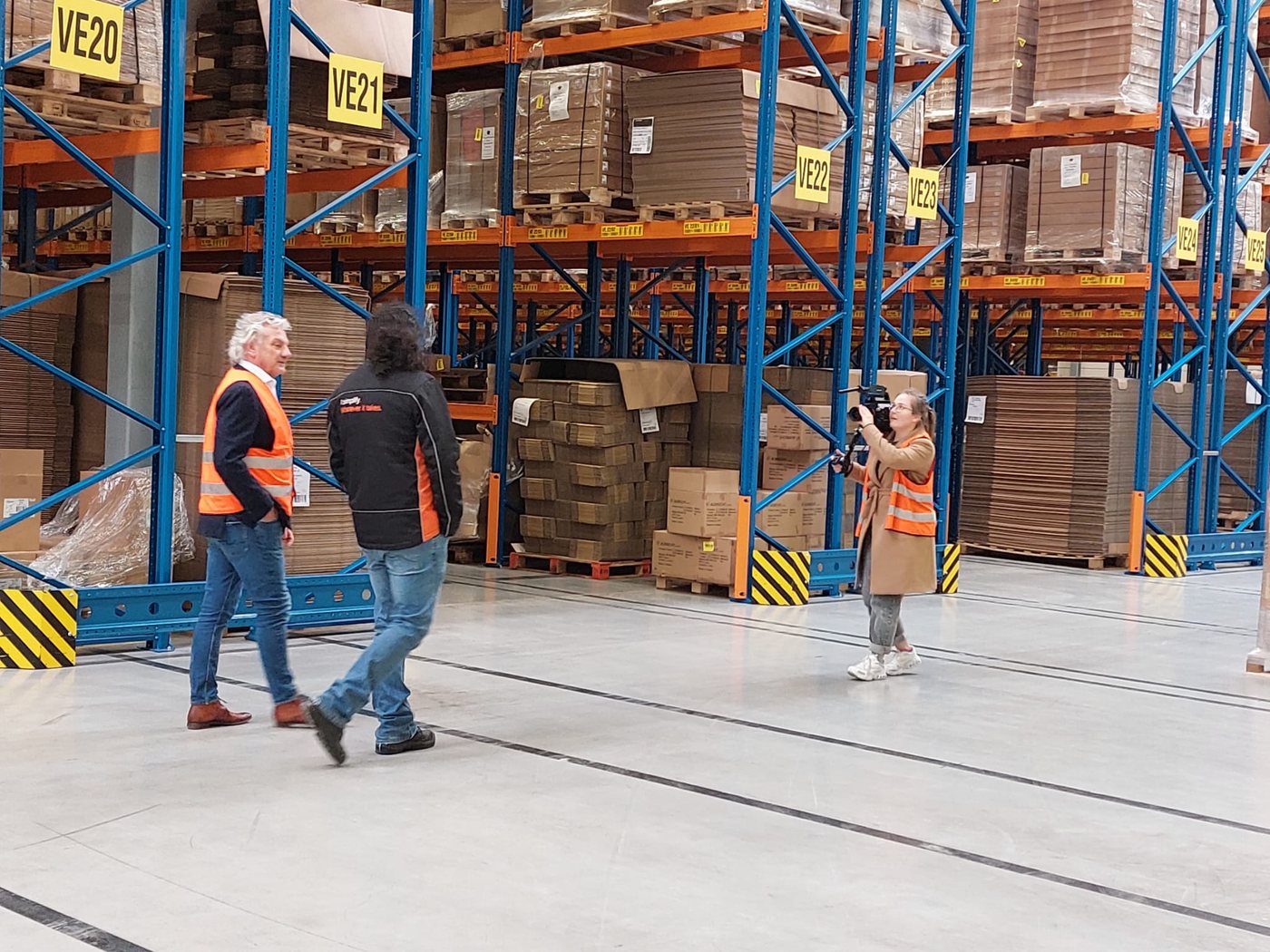
Logistics
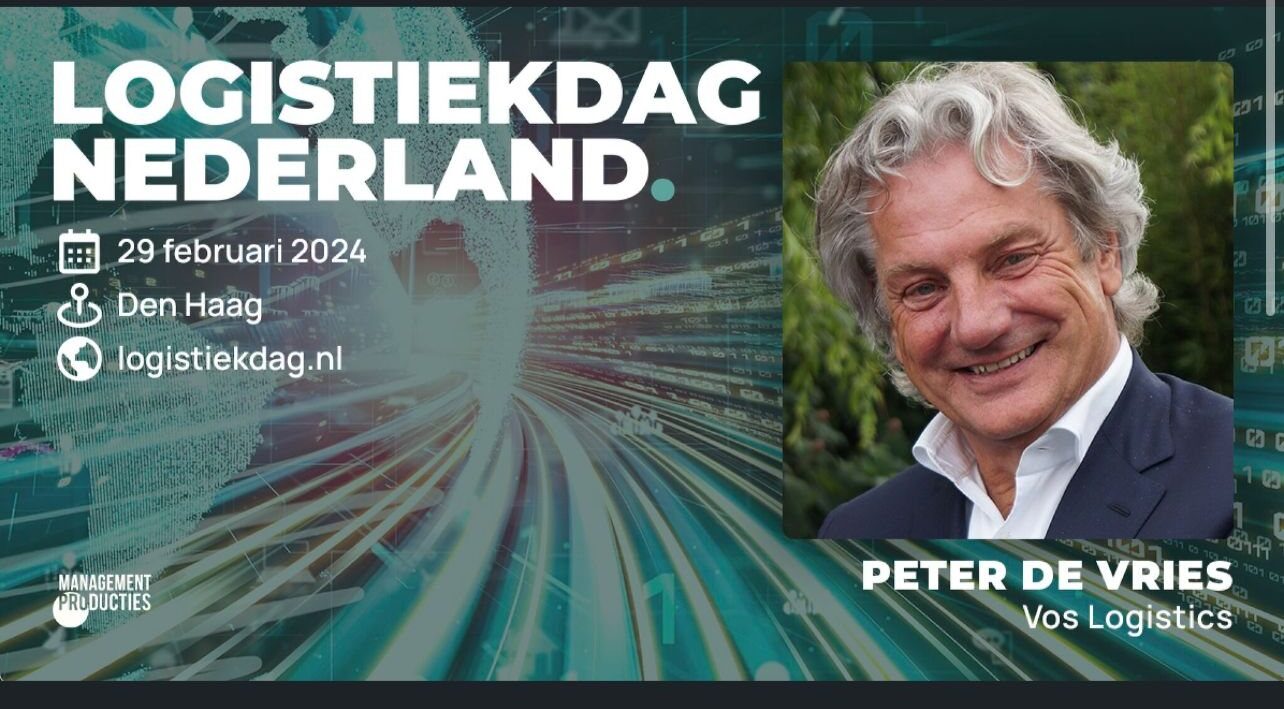
Lectures
Community
Latest articles
Why a turnaround is never purely financial
Coming soon
The future of Shared Logistics
Coming soon
Good oversight starts with listening
Coming soon
Experience comes with responsibility
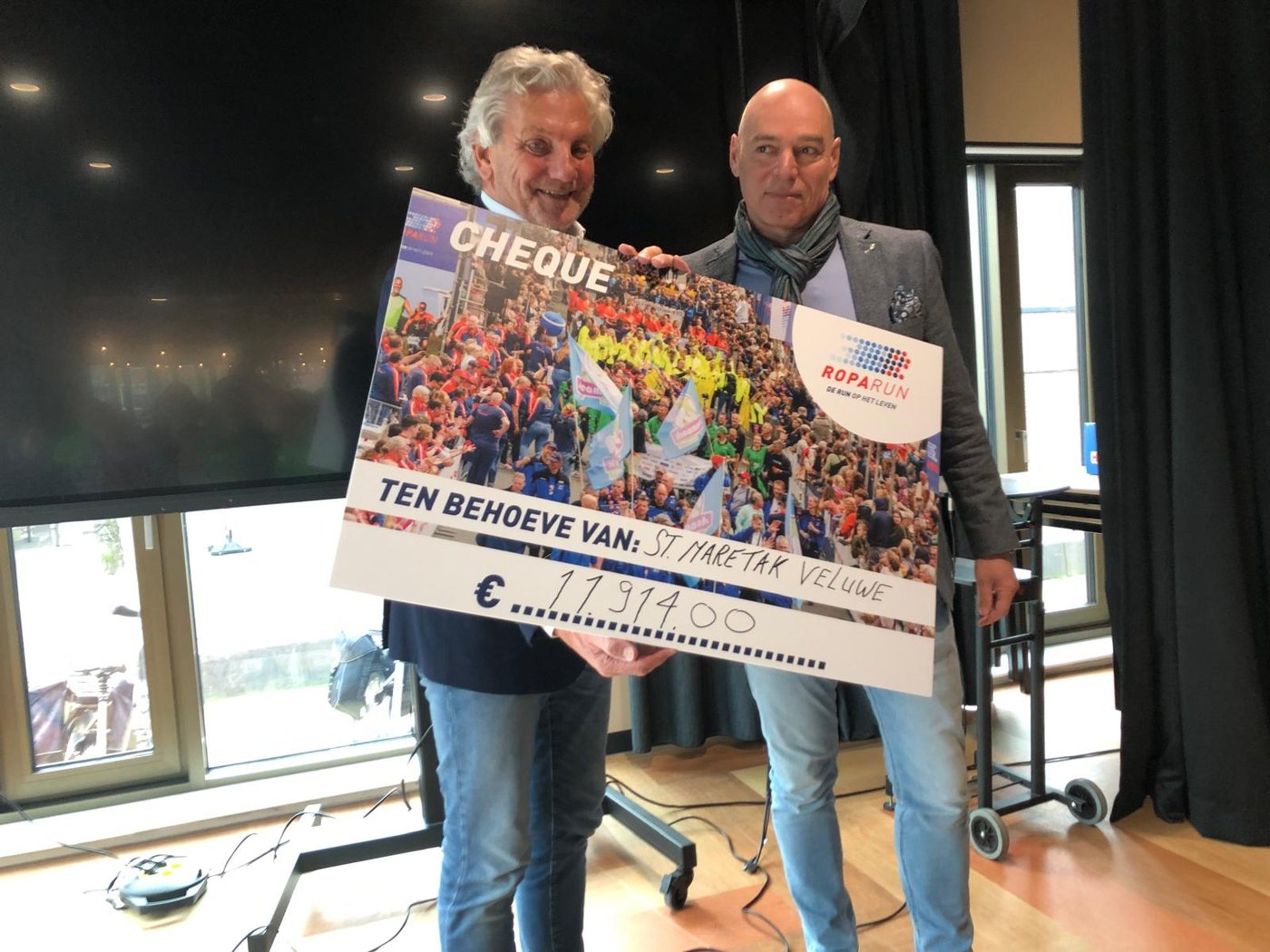
That is why I am actively committed to community organisations and local initiatives in the fields of governance, healthcare, education and society.
Care for an informal conversation about governance, boards, advisory boards or supervisory directorships, or about strategy?
I would be happy to meet.